

What 6,500+ Pizza Oven Enquiries Revealed About Buyer Preferences in India
Most buyers start their search with a simple question:
“Which is the best pizza oven?”
After speaking with more than 6,500 pizza oven buyers across India, we noticed something interesting.
Very few buyers actually know what type of oven is best suited for their business.
Most searches begin with terms such as:
- Wood Fired Pizza Oven
- Brick Pizza Oven
- Neapolitan Pizza Oven
- Commercial Pizza Oven
However, once the discussion moves beyond photos and pricing, the real questions begin.
Questions about:
- Capacity
- Installation
- Portability
- Fuel
- Space requirements
- Long-term operation
The result is that many buyers who initially want one type of oven eventually choose something completely different.
This article shares the most common patterns we have observed from thousands of pizza oven enquiries across restaurants, cafés, resorts, farmhouses, catering businesses and cloud kitchens.
Most buyers don’t know whether they need a brick oven, metal oven or something else entirely.
Most Buyers Think They Need the Best Pizza Oven
The reality is different.
Most businesses do not need the “best” pizza oven.
They need the oven that fits their business model.
A premium Italian restaurant has very different requirements compared to:
- A catering company
- A cloud kitchen
- A food truck
- A rooftop café
- A resort
Yet many buyers initially compare ovens based only on:
- Price
- Appearance
- Social media photos
Before evaluating how the oven will actually be used.
The Three Search Terms We Hear Most Often
Most enquiries begin with one of these phrases:
“I Need a Wood Fired Pizza Oven”
Usually means:
- Authentic pizza experience
- Traditional cooking
- Better flavour
“I Need a Brick Pizza Oven”
Usually means:
- Premium appearance
- Authenticity
- Restaurant installation
“I Need a Neapolitan Pizza Oven“
Interestingly, many buyers use the word Neapolitan without fully understanding what it means.
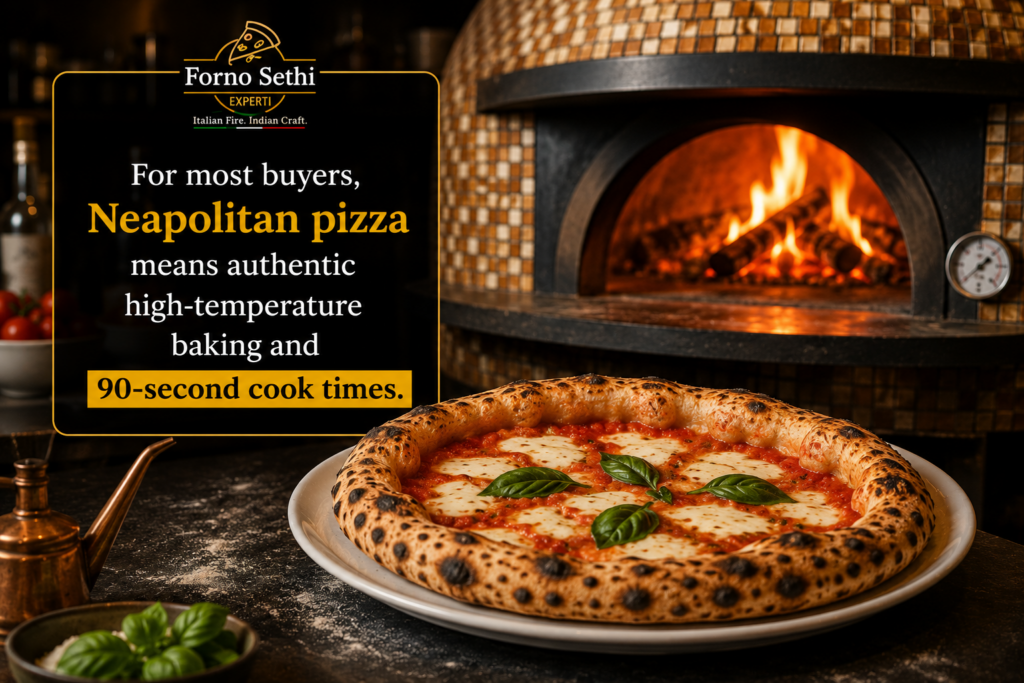
For most buyers, Neapolitan generally represents:
- 450–500°C baking temperatures
- 90-second pizza baking
- Authentic Italian pizza experience
- Traditional dome oven appearance
The discussion about dome geometry, thermal design and oven ratios usually comes much later.
Watch: What 6,500+ Pizza Oven Enquiries Taught Us
Before diving into the complete guide, watch this short video where we share some of the most common pizza oven buying mistakes and insights gathered from 6,500+ enquiries across restaurants, cafés, resorts and catering businesses in India.
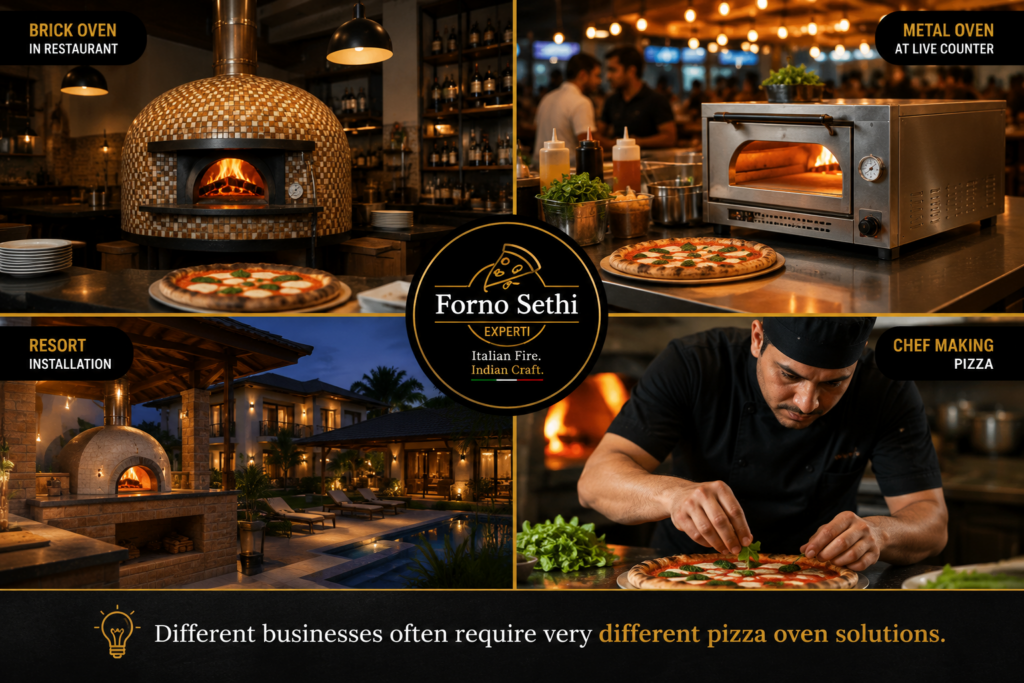
Why Premium Restaurants Usually Choose Brick Ovens
One pattern appears consistently.
When budget, space and installation constraints are not major concerns, most premium restaurants move towards brick ovens.
Why?
Because a brick oven offers more than cooking performance.
It becomes part of the dining experience.
Benefits restaurant owners commonly value:
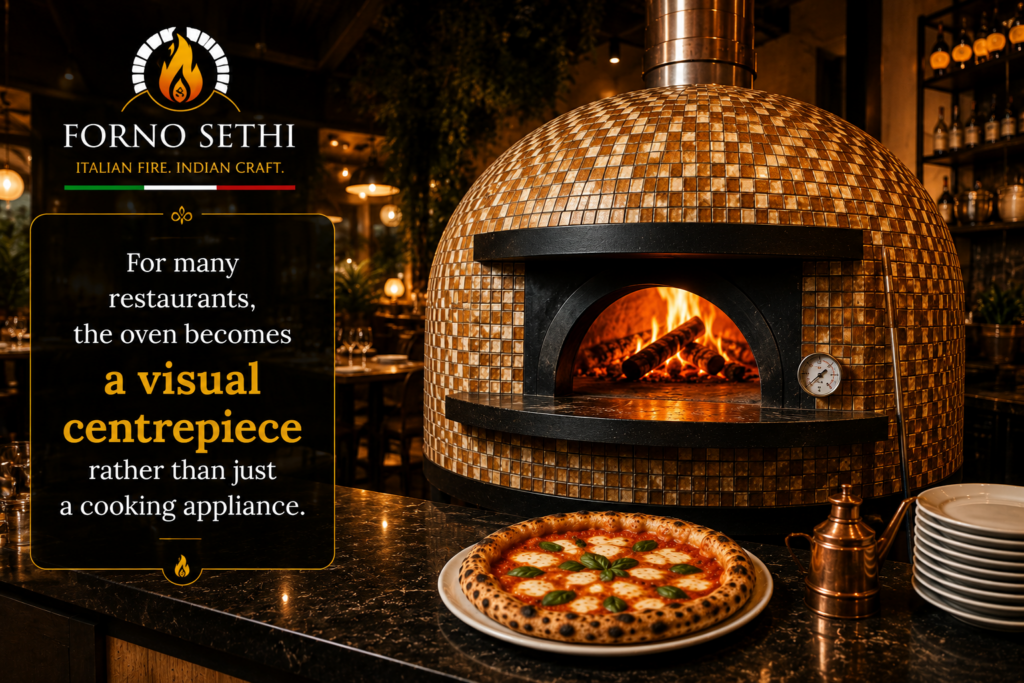
✔ Authentic wood-fired appearance
✔ Strong heat retention
✔ Open kitchen attraction
✔ Premium customer perception
✔ Long service stability
✔ Better integration with restaurant interiors
Many restaurants also customize:
- Mosaic tile finishes
- Custom colour combinations
- Restaurant branding
- Logo installations
In many cases, guests photograph the restaurant brick oven almost as often as the food
Why Catering Businesses Usually Choose Metal Ovens
Catering businesses evaluate ovens very differently.
Their priorities are:
- Portability
- Setup speed
- Transportation
- Flexibility
This is why metal ovens are increasingly popular in:
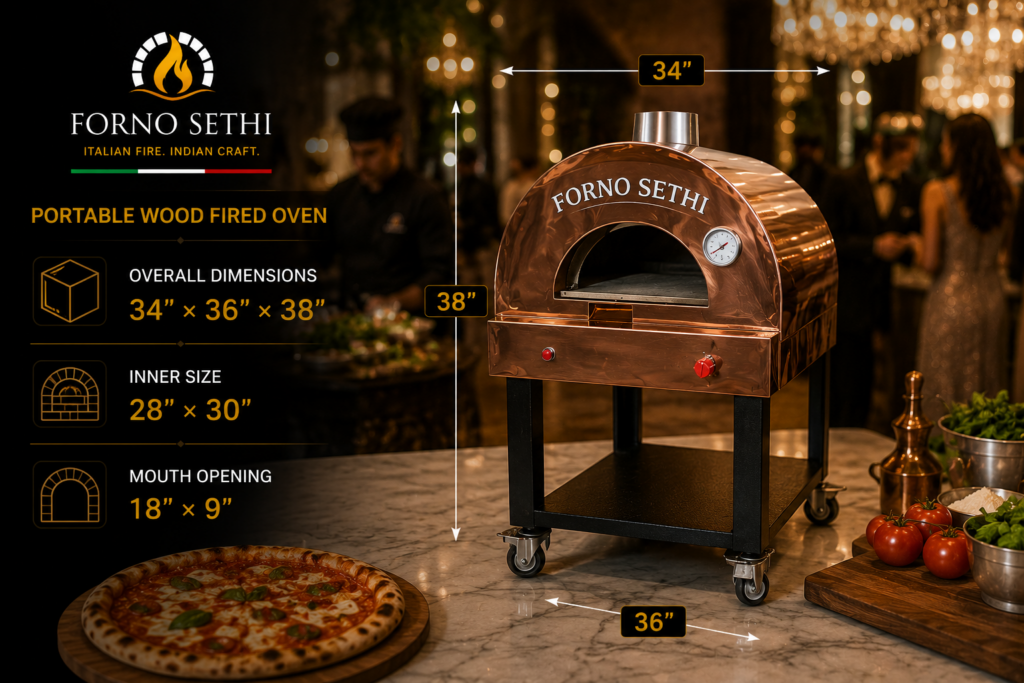
- Weddings
- Live counters
- Catering companies
- Farmhouse events
- Mobile kitchens
Benefits include:
✔ Easier transportation
✔ Faster deployment
✔ Smaller footprint
✔ Lower overall weight
✔ Hybrid fuel flexibility
For catering businesses, moving our catering oven often matters more than maximum thermal mass.
Why Similar Looking Pizza Ovens Can Perform Very Differently
Ye bahut powerful section hai.
Yahan hum explain karenge:
Restaurant owners often compare ovens based on:
- Dome shape
- Mosaic tiles
- Colour
- Exterior appearance
However, two ovens that look almost identical from the outside can perform very differently during service.
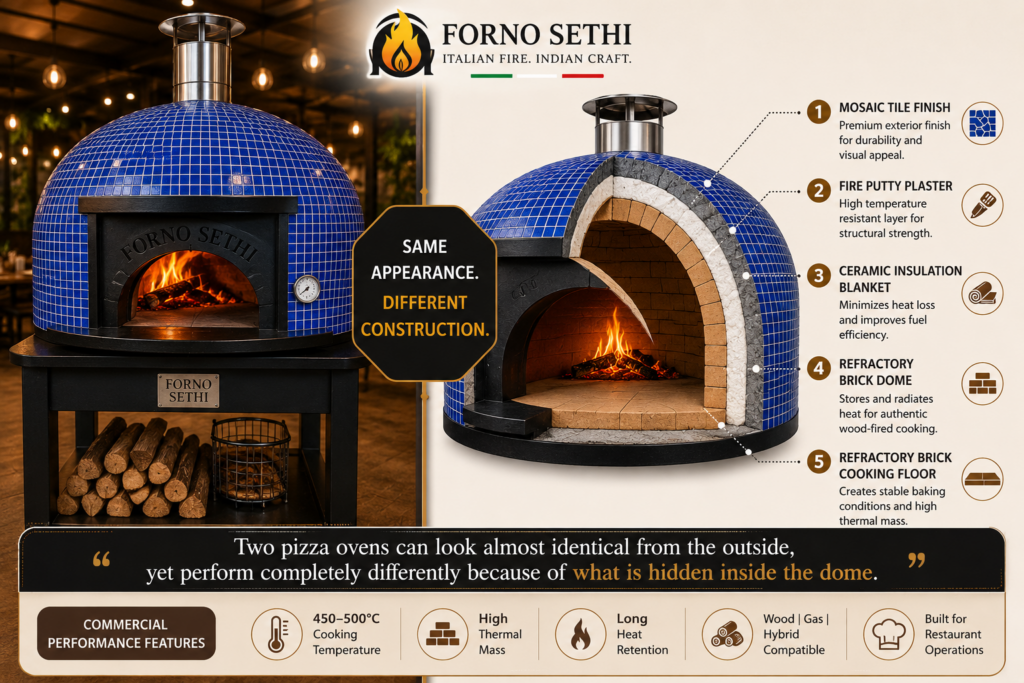
What Actually Affects Performance?
✔ Thermal mass
✔ Insulation thickness
✔ Dome geometry
✔ Cooking floor construction
✔ Mouth opening ratio
✔ Heat circulation
| Factor | Why It Matters |
|---|---|
| Dome Geometry | Heat reflection |
| Insulation | Heat retention |
| Floor Construction | Pizza base cooking |
| Mouth Size | Heat loss control |
| Thermal Mass | Temperature stability |
The Instagram Effect Nobody Talks About
One trend has become increasingly visible over the last few years.
Buyers are no longer choosing ovens based only on cooking performance.
They also think about:
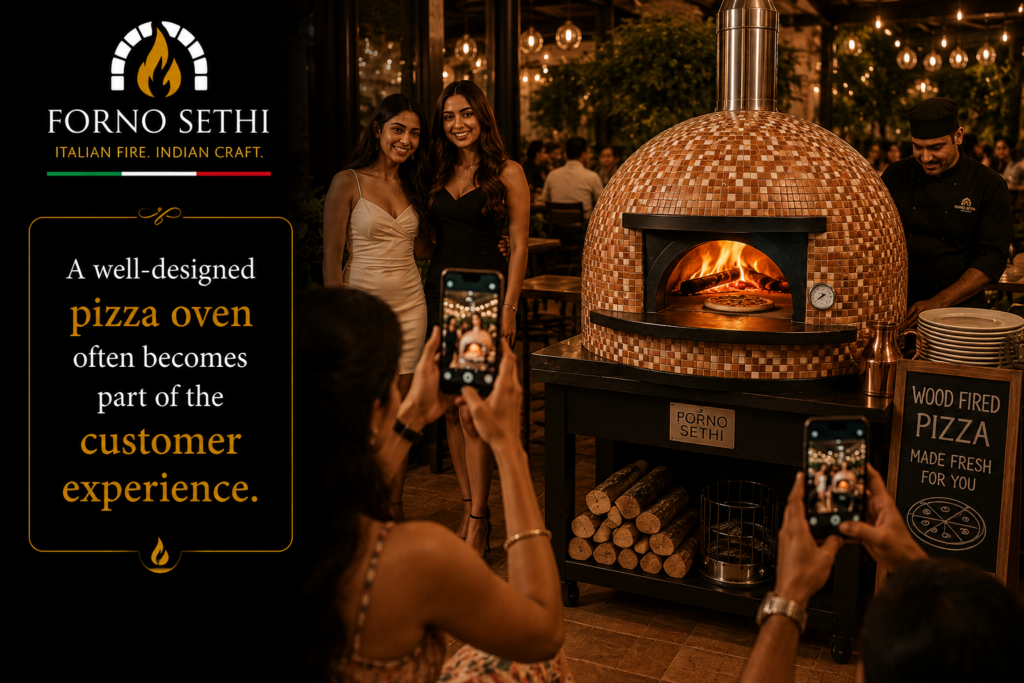
- Guest experience
- Social media photos
- Open kitchen presentation
- Brand visibility
Many restaurant owners specifically request:
- Custom mosaic designs
- Brand logos
- Signature colour schemes
The oven becomes part of the marketing.
When guests photograph the oven and share it online, the installation continues generating visibility long after the pizza is served.
The Most Common Mistakes Buyers Make
After handling thousands of pizza oven enquiries across India, we noticed the same mistakes appearing again and again. Most of these issues can be avoided with proper planning before placing an order.
Choosing Based Only on Price
The cheapest oven often becomes the most expensive decision later. Build quality, insulation, thermal performance and long-term reliability matter far more than the initial purchase price.
Ignoring Future Capacity Requirements
Many businesses purchase an oven based on today’s demand and outgrow it within months. Always consider future growth before finalizing oven size and production capacity.
Not Measuring Access Routes
Many buyers focus only on kitchen space and forget the route required to move the oven into position.
✔ Staircases
✔ Lifts
✔ Rooftop Access
Not Planning Chimney Routes
A properly planned chimney system is critical for airflow, draft performance and heat management. This should always be considered before installation begins.
Assuming All Wood Fired Ovens Perform the Same
Two ovens may look similar externally but perform very differently. Construction method, insulation quality, thermal mass and overall oven design significantly affect baking performance.
Many installation challenges are not caused by the oven itself. In our experience, access limitations, chimney planning issues and site preparation mistakes create more problems than the oven construction itself.
Brick vs Metal vs Castable: Understanding Construction Methods
This is not a “Which Is Best?” comparison.
This is not a ranking article.
The purpose of this section is simply to explain the different construction methods commonly used in commercial pizza ovens.
One misconception we frequently encounter is that every dome-shaped pizza oven is built the same way.
In reality, commercial pizza ovens are typically built using brick, castable or metal construction methods, each serving different installation and operational requirements.
| Construction Type | Common Use |
|---|---|
| Brick | Restaurants, Resorts, Premium Dining Spaces |
| Metal | Catering, Mobile Kitchens, Event Setups |
| Castable | Dome-Style Commercial Installations |
Brick Construction
- Built using refractory bricks
- High thermal mass
- Excellent heat storage capability
- Long heat retention characteristics
- Commonly used in restaurants and resort projects
Castable Construction
- Built using refractory cast material
- Dome-style construction method
- Can visually resemble traditional ovens
- Commonly used in commercial installations
- Different manufacturing process from brick-built ovens
Metal Construction
- Fabricated steel structure
- Insulated body design
- Lower overall weight
- Portable and easier to relocate
- Popular for catering and mobile operations
Real Installation Challenges We Have Encountered
Pizza oven installations often involve challenges that are not obvious during planning.
Examples include:
Rooftop Café Access Issues
Sometimes the oven fits the kitchen but not the access route leading to it.
Door Width Restrictions
In some projects, oven frames required modification because the installation route was narrower than expected.
Incorrect Exhaust Integration
In one installation, the oven chimney was connected directly to a high-suction exhaust system.
The result was excessive heat loss and poor temperature retention.
Gas Pressure Problems
In another project, low incoming gas pressure was limiting burner performance rather than the oven itself.
These situations highlight why proper planning matters.
What Actually Determines the Right Pizza Oven?
The answer is usually not price.
The answer is usually not appearance.
The right pizza oven is determined by how well it fits your business model, production requirements and installation environment.
| Factor | Importance |
|---|---|
| Business Type | High |
| Daily Pizza Volume | High |
| Available Space | High |
| Installation Access | High |
| Portability Requirement | High |
| Budget | Medium |
| Appearance | Medium to High |
The Question Every Buyer Should Ask
That single change in thinking usually leads to a much better purchasing decision.
Final Thoughts
After thousands of pizza oven enquiries, one thing has become very clear.
Most buyers do not struggle because there are too few options.
They struggle because there are too many.
The most successful pizza oven installations are rarely the most expensive ones.
They are the ovens that match the business model they were built for.
Still Not Sure Which Pizza Oven Is Right For Your Business?
Choosing the wrong pizza oven can impact production capacity, installation costs, workflow and long-term profitability. Speak with our team and get recommendations based on your business type, space, expected pizza volume and budget.
FAQs: Frequently Asked Questions from Real Pizza Oven Buyers
After thousands of pizza oven enquiries across India, these are some of the most common questions buyers ask before making a purchase decision.
Which type of pizza oven is best for a restaurant?
The right choice depends on available space, expected pizza volume, kitchen layout, installation constraints and whether the oven will be visible to customers.
Many premium restaurants prefer brick ovens for their thermal performance and visual appeal, while smaller outlets may choose metal ovens where portability or space is a priority.
Why do many buyers initially prefer brick pizza ovens?
Brick ovens also become a visual centerpiece that many restaurants, cafés and resorts use as part of their brand identity.
Why do some buyers switch from brick ovens to metal ovens?
- Budget limitations
- Space constraints
- Portability requirements
- Rooftop installation challenges
- Catering or mobile operations
Does a bigger pizza oven always mean better performance?
A larger oven requires more space, more fuel and longer heating times.
The ideal oven size depends on daily pizza volume rather than simply choosing the biggest model available.
What is the most common mistake buyers make before ordering a pizza oven?
- Door widths
- Staircases
- Lift dimensions
- Rooftop access
- Chimney routing
Do all dome-shaped pizza ovens perform the same?
Two ovens can appear almost identical externally while using completely different construction methods internally.
Factors such as thermal mass, insulation quality, dome construction and cooking floor materials all influence real-world performance.
What should I decide first: oven type or pizza capacity?
Once expected daily pizza volume is understood, selecting the appropriate oven type becomes much easier.
Choosing an oven without understanding production requirements often leads to overbuying or underbuying.
Is portability important for every pizza business?
Restaurants and resorts often prioritize aesthetics and long-term installation, while catering companies, event operators and mobile kitchens usually place much greater importance on portability.
The correct choice depends on how and where the oven will be used.
What does “Neapolitan pizza oven” actually mean?
The term is often associated with authentic high-temperature wood-fired pizza production.
If I am confused between multiple oven options, what should I focus on?
❌ Which pizza oven is best?
Ask:
✔ Which pizza oven is best for my business?
The answer usually depends on:
- Business type
- Daily pizza volume
- Installation environment
- Visibility requirements
- Portability needs
- Budget

Anshul Sethi is the founder and design engineer behind Forno Sethi, an in-house manufacturer of commercial wood fired, gas, and hybrid pizza ovens based in Delhi. With over 10 years of experience in heavy metal fabrication and thermal engineering, he has consulted on 6,500+ commercial kitchen setups and 250+ installations across India, specializing in brick oven construction, burner engineering, and kitchen ventilation planning.