
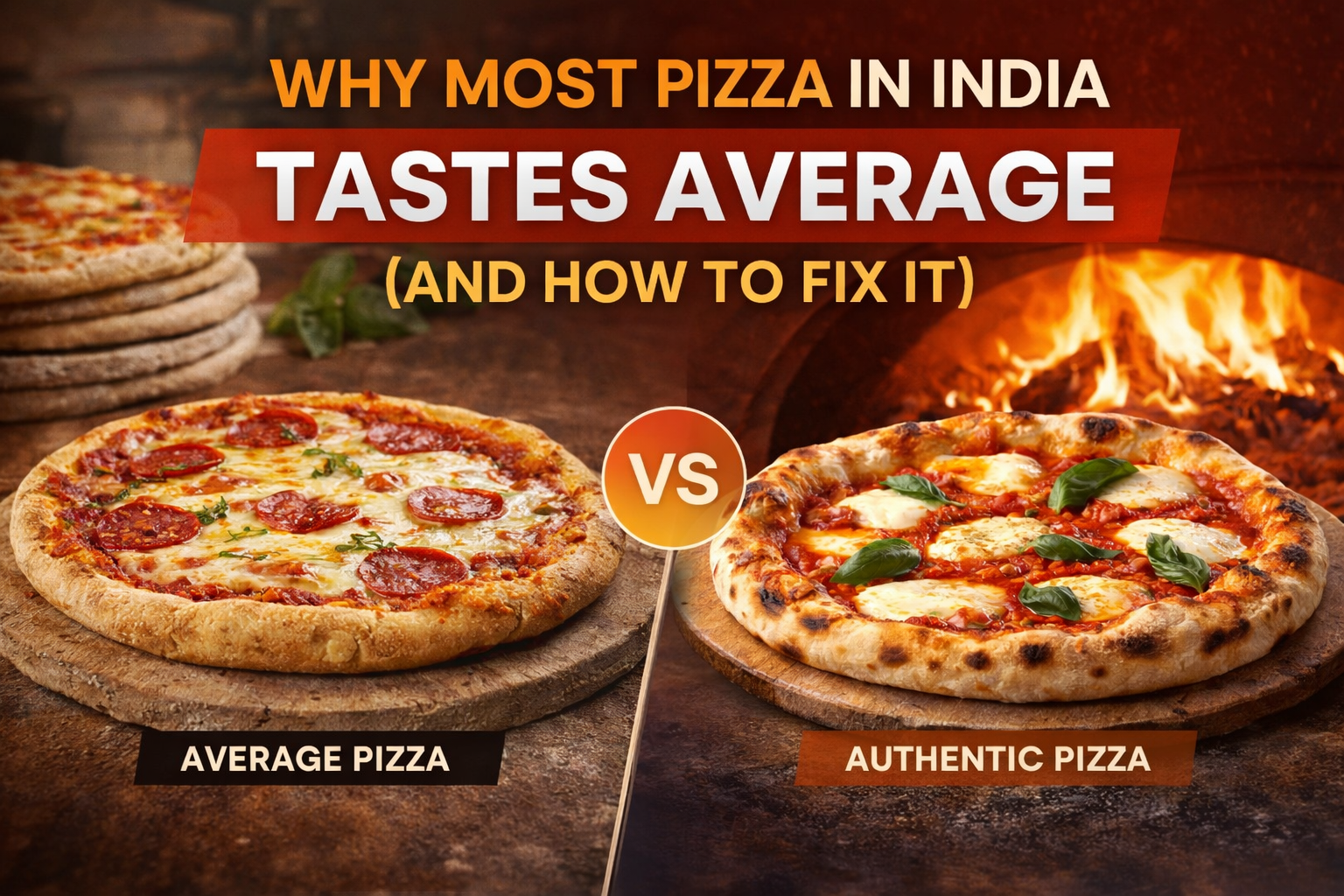
Why Most Pizza in India Tastes Average (And How to Fix It)
Have you ever felt this?
👉 Pizza looks good… but doesn’t taste special.
The base feels dry or chewy.
The crust lacks texture.
And the overall experience feels just “okay.”
You’re not alone.
Across India, a large number of pizza businesses are serving products that are fast to make — but average in quality.
The real question is:
👉 Why does this happen?
The Real Problem — It’s Not the Toppings
Most people assume taste depends on:
- Cheese quality
- Toppings
- Sauces
But in reality, that’s not where the problem starts.
👉 The difference between average and authentic pizza comes from:
- Dough quality
- Baking temperature
- Oven performance
Ready-Made Base vs Fresh Dough — The Biggest Difference
This is where most businesses compromise.
Ready-Made Pizza Base (Common in Market)

- Pre-cooked, factory-made
- Designed for convenience
- Works in low-temperature ovens
👉 Result:
- Flat texture
- No real crust
- Lacks freshness
Fresh Dough Pizza (Authentic Method)

- Prepared in-house
- Fermented for better flavor
- Baked at high temperature (+450°C)
👉 Result:
- Light, airy crust
- Better texture
- Rich taste
👉 This one change alone can completely transform pizza quality.
Why Temperature Changes Everything
Here’s something most buyers don’t realize:
Authentic pizza requires extremely high temperature +450°C
Standard Commercial Ovens:
- Operate at lower temperatures
- Bake slowly
Result:
- Dry crust
- No texture
- Average taste
High-Temperature Baking (400–450°C+)
- Fast cooking (60–90 seconds)
- Proper crust formation
- Better moisture retention
Result:
- Crispy outside, soft inside
- Authentic texture
- Better flavor
This is the science behind great pizza.
Why Most Pizza Businesses Don’t Achieve This
It’s not because they don’t want to.
It’s because of practical limitations:
Common Reasons:
- Using low-cost ovens
- No temperature control
- No proper setup planning
- Focus on speed over quality
Many kitchens are designed for quick output, not quality baking
The Real Trade-Off — Speed vs Quality
Most setups follow this approach:
👉 Faster service → lower quality
But this creates long-term problems:
- No brand differentiation
- Low repeat customers
- Price-based competition
In simple terms:
You sell more — but earn less in the long run
How to Fix This (Without Complicating Your Setup)
Improving pizza quality is not about changing everything.
It’s about fixing the fundamentals.
Step 1: Use Fresh Dough
- Improves texture
- Enhances taste
- Creates better customer experience
Step 2: Bake at High Temperature
- Faster cooking
- Better crust
- Consistent quality
Step 3: Use the Right Oven
This is the most important factor.
Because:
- Fresh dough needs high heat
- High heat needs the right oven
Why Wood-Fired / Hybrid Ovens Work Better
- Achieve 400–450°C easily
- Maintain consistent heat
- Improve baking performance
This directly impacts:
- Taste
- Texture
- Output
What Premium Pizza Brands Do Differently
High-performing pizza brands focus on:
- Dough preparation
- High-temperature baking
- Consistent oven performance
That’s why their pizza feels different — even with similar ingredients.
The Hidden Cost of “Average Pizza”
Serving average pizza may seem fine in the short term.
But over time:
- Customers don’t come back
- You compete only on price
- Brand value stays low
👉 Improving quality is not a cost —
👉 It’s a long-term growth strategy
Final Thought
If your pizza doesn’t stand out, the problem is rarely the toppings.
It’s the process behind it.
When you focus on:
- Fresh dough
- High temperature
- Proper oven
The entire experience changes.
Tell us:
👉Your current setup
👉Type of pizza you serve
👉Daily order volume

Anshul Sethi is the founder and design engineer behind Forno Sethi, an in-house manufacturer of commercial wood fired, gas, and hybrid pizza ovens based in Delhi. With over 10 years of experience in heavy metal fabrication and thermal engineering, he has consulted on 6,500+ commercial kitchen setups and 250+ installations across India, specializing in brick oven construction, burner engineering, and kitchen ventilation planning.