
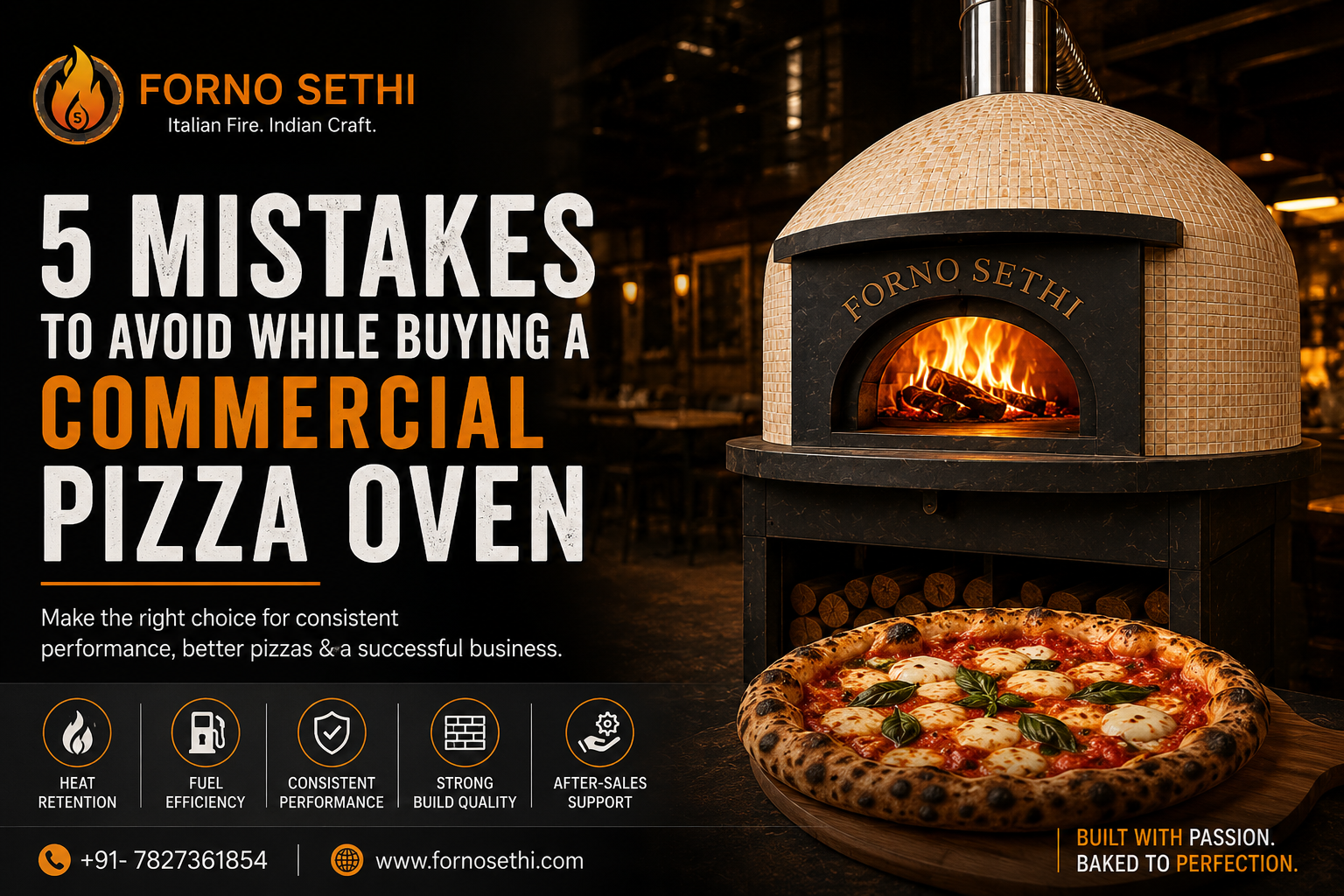
5 Mistakes to Avoid While Buying a Commercial Pizza Oven in India
Opening a pizza cafe or upgrading your restaurant kitchen is exciting. The aroma of fresh dough, the sound of crackling fire, and the sight of perfectly baked pizzas can turn a simple food business into a memorable dining experience.
But before that first pizza comes out of the oven, there is one decision that can define the success of your kitchen for years:
Choosing the right commercial pizza oven.
Many cafe owners in India focus only on the appearance or price of the oven and ignore the engineering, insulation, fuel efficiency, and long-term operational performance behind it. As a result, they later struggle with uneven baking, excessive fuel consumption, slow recovery time during rush hours, and even cracked oven structures.
A commercial pizza oven is not just another kitchen appliance. It is the heart of your pizza operation.
Whether you are planning a wood fired pizza cafe, a modern artisan pizzeria, a cloud kitchen, or an outdoor dining concept, avoiding these common mistakes can save you money, stress, and operational problems in the future.
1. Choosing a Pizza Oven Only Based on Price
One of the biggest mistakes buyers make is selecting a commercial pizza oven simply because it is cheaper.
At first glance, many ovens may look similar from the outside. However, the real difference lies inside the build quality, insulation system, refractory materials, heat retention capability, and overall craftsmanship.

Low-cost ovens often compromise on:
- Insulation quality
- Heat retention
- Steel thickness
- Refractory material quality
- Chimney performance
- Structural durability
This can lead to problems such as:
- High wood or gas consumption
- Uneven pizza baking
- Temperature fluctuations
- Heat loss during rush hours
- Cracks after repeated heating cycles
A properly designed oven may cost more initially, but it performs better for years and provides more consistent commercial results.
For restaurants and cafes, long-term operational efficiency matters more than short-term savings.
2. Ignoring Heat Retention and Insulation
Many buyers underestimate the importance of insulation in a commercial pizza oven.
In reality, insulation is one of the most critical elements of oven performance.
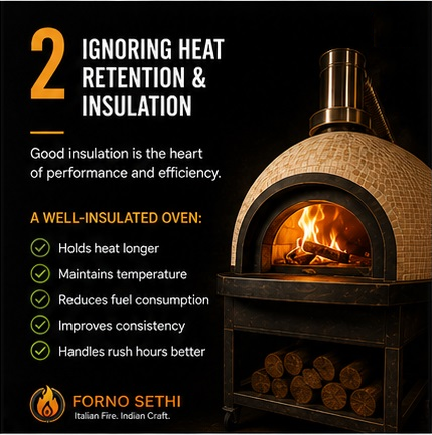
A well-insulated oven:
- Holds heat for longer periods
- Maintains stable baking temperatures
- Reduces fuel consumption
- Improves pizza consistency
- Handles commercial rush hours efficiently
Poor insulation causes continuous heat loss. This means the oven consumes more fuel while struggling to maintain proper baking temperature.
With rising fuel costs in India, proper insulation has become more important than ever.
When evaluating a pizza oven, always ask about:
- Heat retention capability
- Insulation materials used
- Dome insulation quality
- Floor insulation system
- Recovery time between batches
Professional pizza baking requires temperature stability, not just fire.
3. Buying the Wrong Oven Size for Your Kitchen
Another common mistake is choosing an oven size without understanding actual kitchen demand.
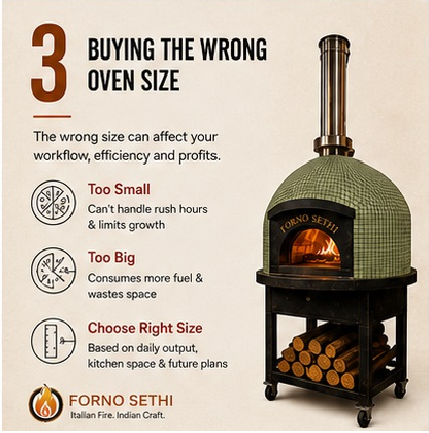
Daily Pizza Output
Estimate how many pizzas you expect to serve during rush hours.
Kitchen Space Availability
The oven should fit comfortably while maintaining proper workflow and ventilation.
Fuel Type and Usage
Wood fired, gas fired, or hybrid setups all require different operational planning.
Future Expansion
Many growing cafes later regret purchasing smaller ovens that limit production capacity.
Choosing the correct oven size improves kitchen efficiency, staff workflow, and customer service speed.
4. Ignoring Chimney and Ventilation Planning
Even premium pizza ovens can perform poorly if the chimney and ventilation systems are not planned correctly.

Poor chimney design can cause:
- Smoke issues
- Improper airflow
- Weak flame performance
- Heat imbalance
- Uncomfortable kitchen conditions
In commercial kitchens, airflow management is extremely important for both baking performance and operational comfort.
A professionally planned installation should consider:
- Chimney height
- Draft efficiency
- Kitchen ventilation
- Hood systems
- Heat circulation
Many operational problems blamed on the oven are actually caused by poor installation planning.
This is why installation guidance matters just as much as oven manufacturing.
5. Not Checking After-Sales Support and Expertise
A commercial pizza oven is a long-term business investment.
Unfortunately, many buyers purchase ovens from sellers who disappear after delivery.
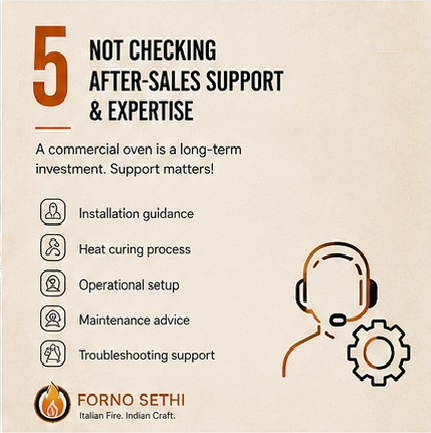
Professional support is important for:
- Installation guidance
- Heat curing process
- Operational setup
- Maintenance advice
- Troubleshooting support
An experienced oven maker understands not only fabrication but also real-world commercial kitchen operations.
Before finalizing any purchase, ask:
- Do they understand commercial pizza baking?
- Can they guide proper installation?
- Do they offer operational support?
- Have they completed real restaurant projects?
- Do they understand heat balancing and commercial workflow?
The right wood-fired pizza oven manufacturer becomes a long-term partner, not just a supplier.
How to Choose the Right Commercial Pizza Oven

A good commercial pizza oven should balance:
- Heat retention
- Fuel efficiency
- Consistent baking performance
- Strong build quality
- Proper insulation
- Reliable support
- Kitchen workflow compatibility
The best commercial pizza ovens are designed not just to create fire, but to create consistency.
In artisan pizza baking, consistency is everything.
Final Thoughts

The commercial pizza industry in India is growing rapidly. Customers today expect authentic flavor, visual experience, and consistent quality.
Choosing the right pizza oven is one of the most important decisions for any cafe, restaurant, resort, or cloud kitchen setup.
Avoiding these common mistakes can help you:
- Reduce long-term operational costs
- Improve pizza quality
- Increase kitchen efficiency
- Build a better customer experience
- Create a stronger restaurant brand
A commercial pizza oven should not be viewed as just equipment. It should be seen as the centerpiece of your pizza kitchen experience.
If you are planning a commercial pizza setup, focus on long-term performance, craftsmanship, and operational reliability — not just the initial purchase price.

Anshul Sethi is the founder and design engineer behind Forno Sethi, an in-house manufacturer of commercial wood fired, gas, and hybrid pizza ovens based in Delhi. With over 10 years of experience in heavy metal fabrication and thermal engineering, he has consulted on 6,500+ commercial kitchen setups and 250+ installations across India, specializing in brick oven construction, burner engineering, and kitchen ventilation planning.